
Hope for Dementia’s guest author Carol Steinberg* provides some valuable and useful information on the steps you can take to support your family members who are in the early stages of dementia.
During holiday celebrations, many people focus on the details of food, decorations, and gifts. However, it is equally important to pay attention to the people around you.
Holiday get-togethers often provide an opportunity to notice changes in loved ones that may signal the onset of Alzheimer’s disease or related dementias. Common signs can include forgetting names, repeating questions, or exhibiting new or different behaviors. Both adults and children may observe these changes, with children sometimes asking, “What’s wrong with Grandpa?”
It’s crucial to find out the answer. With Alzheimer’s disease, the earlier an accurate diagnosis is made, the better for multiple reasons.
Most importantly, new therapies for Alzheimer’s have a short window for initiation of treatment. In Canada, Health Canada approved the first disease-modifying treatment for Alzheimer’s in October 2025 for individuals diagnosed with mild cognitive impairment or early-stage Alzheimer’s; lecanemab (brand: Leqembi) can help slow the progression of the disease by removing brain amyloid, a hallmark of Alzheimer’s. Another disease-modifying drug, donanemab, is currently under regulatory review.
Early diagnosis also allows families to take steps that can improve a loved one’s quality of life and maintain independence longer. Depending on individual circumstances, these steps may include making home safety adjustments, installing monitoring systems or other technology, conducting driving assessments, and discussing legal, financial, and care planning. Families can also connect with government and community social services that offer socialization opportunities for individuals with cognitive decline.
Social isolation is one of 14 modifiable risk factors for dementia identified by the Lancet Commission on dementia prevention, intervention, and care. Therefore, lifestyle changes that promote socialization, including activities that provide enjoyment, can help prevent or delay dementia and support those living with Alzheimer’s or a related disease. For people with dementia, peer support groups, creative arts programs, and memory cafes are all valuable meeting points.
Inside the circle of family and friends, relationships—starting with friends—tend to diminish or strain as a person’s cognitive decline progresses, according to research. However, educating friends and family, including children, about Alzheimer’s and effective communication and engagement strategies can help retain bonds. Intergenerational activities, for example, not only reduce social isolation but also improve mood and quality of life for people with dementia, while the younger generation grows greater empathy.
In the face of Alzheimer’s or related dementias, heightened awareness and understanding can instill hope into everyday life—and into holiday celebrations.
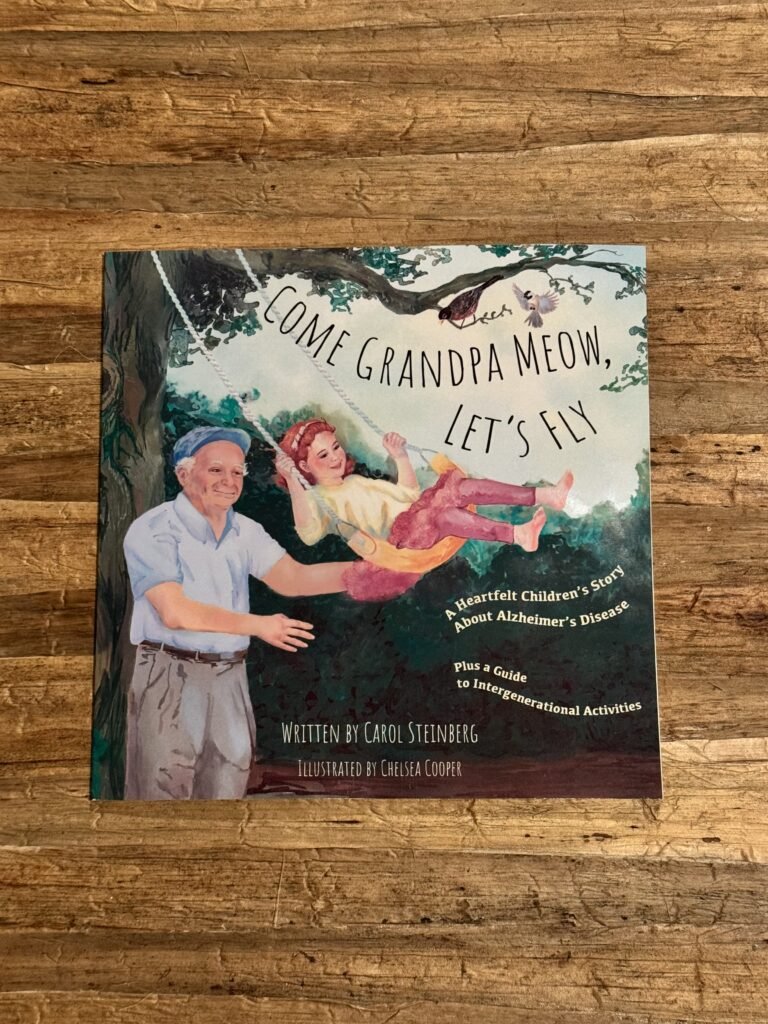
*Carol Steinberg is a writer and editor, and a former executive at Alzheimer’s organizations in the U.S. She is the author of a new children’s book, “Grandpa Meow, Let’s Fly: A Heartfelt Children’s Story About Alzheimer’s Disease Plus a Guide to Intergenerational Activities.”
Amazon URL: https://bit.ly/ComeGrandpaMeow